Welcome to the Mathematical World!
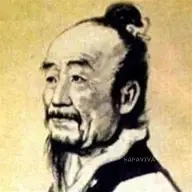
Liu Hui
Chinese Mathematician of the Three Kingdoms Period
Liu Hui (c. 225 – c. 295 AD) was a brilliant Chinese mathematician whose work profoundly influenced the development of ancient Chinese mathematics. Living during the politically fragmented yet culturally rich era of the Three Kingdoms, Liu Hui elevated traditional numerical methods to new levels of rigor and precision.
Commentary on The Nine Chapters on the Mathematical Art
Around 263 AD, Liu Hui produced a detailed commentary on Jiuzhang Suanshu (The Nine Chapters on the Mathematical Art), a mathematical text compiled over centuries. His annotations provided clear explanations, logical proofs, and refined methods, transforming the work into a systematic and practical treatise. This made complex concepts more accessible for applications in surveying, architecture, engineering, and administration.
Advancement of π Approximation
Liu Hui is celebrated for improving the approximation of π using a polygonal method more than a millennium before similar approaches appeared in Europe. By inscribing a 3,072-sided polygon within a circle, he estimated:
\(\pi \approx 3.1416\)
His iterative technique demonstrated an intuitive understanding of limits, foreshadowing the principles of integral calculus.
Emphasis on Proof and Rigor
Breaking from earlier traditions that stated results without justification, Liu Hui explained why formulas worked. He used geometric reasoning and step-by-step derivations, aligning ancient Chinese mathematics more closely with the modern notion of mathematical proof.
Contributions to Geometry and Measurement
- Developed a method for calculating the volume of a tetrahedron using the principle of exhaustion, anticipating integral calculus techniques.
- Worked extensively on fractions, linear equations, and the measurement of irregular areas and volumes.
- Applied geometric visualization to practical problems, improving accuracy in land measurement and construction.
Legacy
Liu Hui’s blend of theoretical rigor and practical application secured his place as one of the greatest minds in ancient Chinese science. His methods influenced centuries of Chinese mathematics and remain a remarkable example of early mathematical insight and logical clarity.

All rights reserved by the Mathematical Unity
Contact: +8801400044645
Email: mathematicalhorse1453@gmail.com
Our Discord Server: Mathematical Unity [Ulus Riyadiyat]